The Genie Is Out of the Lamp: Production, Meaning, and Orchestration in the AI Agent Era
Deus Sive Machina #2: The leap from thought to reality has never been this fast — but are we ready?

"Every entity, by its very nature, strives to persist in being." — Spinoza, Ethics, Part III, Proposition 6
"The genie is out of the lamp. You can't put it back. But you choose what to wish for."
I. The Cambrian Explosion: Digital Life Forms Are Multiplying

Six months ago, developing software meant weeks of planning, sprint cycles, and team meetings. Today, an idea that comes to me in the morning can turn into a working prototype by the afternoon. One person, with a handful of AI agents, can do what used to require a team of ten.
This isn't just about speed. This is a phase transition in the nature of production.
Like water turning to steam at 100 degrees — same substance, completely different state. Production is still production, but it's something else now.
What Changed?
Prototype Timeline:
- 2020: 2-3 months (plan → design → code → test)
- 2026: 2-3 days (idea with AI → prototype → demo)
Software Architect Role:
- Before: Coordinating a 15-person team, weeks of planning
- Now: One person + agent team, better results, less time
Content Creation:
- Before: 1 person, 3-4 hours (research + writing + editing)
- Now: Parallel agents in 45 minutes, better quality
And it's not just speed — the quality of work is also improving. Because work can be done in parallel. While one agent writes code, another writes tests, and yet another prepares the documentation.
II. Aladdin's Genie and the Three Wishes Problem

We all know the fairy tale. The genie comes out of the lamp and grants three wishes. But the real lesson of the tale isn't about the wishes themselves — it's about knowing what to wish for.
Here's the problem: At the end of the story, all three wishes either backfire or produce the wrong result. Because the wisher never honestly considered what they truly wanted.
AI agents are out of the lamp. They're not going back in.
Hermes, Claude Code, OpenClaw, Codex, Gemini — a new tool every week. Each one is a genie. Each one says "your wish is my command." But you need to flip the question:
Not "What can you do?" but "What should I do?"
The Genie's Traps
What happens when the genie says "anything you wish"?
Trap 1: Speed Intoxication "I did this in 2 hours!" — feels amazing. But the error rate per hour goes up. Quality control gets skipped. Steps get missed. Looks great on the outside, hollow on the inside.
Trap 2: Abundance Paralysis "I can do everything now, so what should I do?" — choice paralysis. Among a hundred options, making no choice is the easiest. Result: nothing gets finished.
Trap 3: Existential Anxiety "If AI does this better than me, what's left for me?" — a real concern. Answer coming later.
Trap 4: Quality Drift Not checking the agent's output. "Do it, I'll review it later" — but never reviewing it. Result: noise, untested code, user dissatisfaction.
Escaping the Tale: Controlling the Genie
In the tale, the genie deceives the user. But in the tale, the genie is also a prisoner. In real life, the genie is under your control — if you take control.
Taking control means:
- Having wished — Knowing exactly what you want
- Setting conditions — Defining how the genie should behave
- Checking — Reviewing the result, making approve/reject decisions
- Iteration — Sending it back if it's wrong, requesting again
III. From Thought to Reality: Where Did the Barriers Go?

Turning an idea into reality used to require overcoming all of these barriers:
| Barrier | Before | Now | Result | |---------|--------|-----|--------| | Knowledge | Months of learning, courses, books | Ask the agent, learn instantly | ✓ Removed | | Technical | Weeks of coding, debugging, optimizing | Reduced to hours with agents, automated testing | ✓ 10x faster | | Resources | Build a team, servers, tools, licenses | One person + agent mesh, cloud | ✓ Nearly removed | | Deployment | Set up infrastructure, DevOps, monitoring | Coolify, Vercel, one click | ✓ Standardized | | Iteration | Sprint cycles, weekly updates | Real-time feedback, hourly deploy | ✓ Down to minutes |
What does this mean?
The distance between thought and reality has never been this short in human history.
IV. Agent Orchestrator: The Profession of the Future
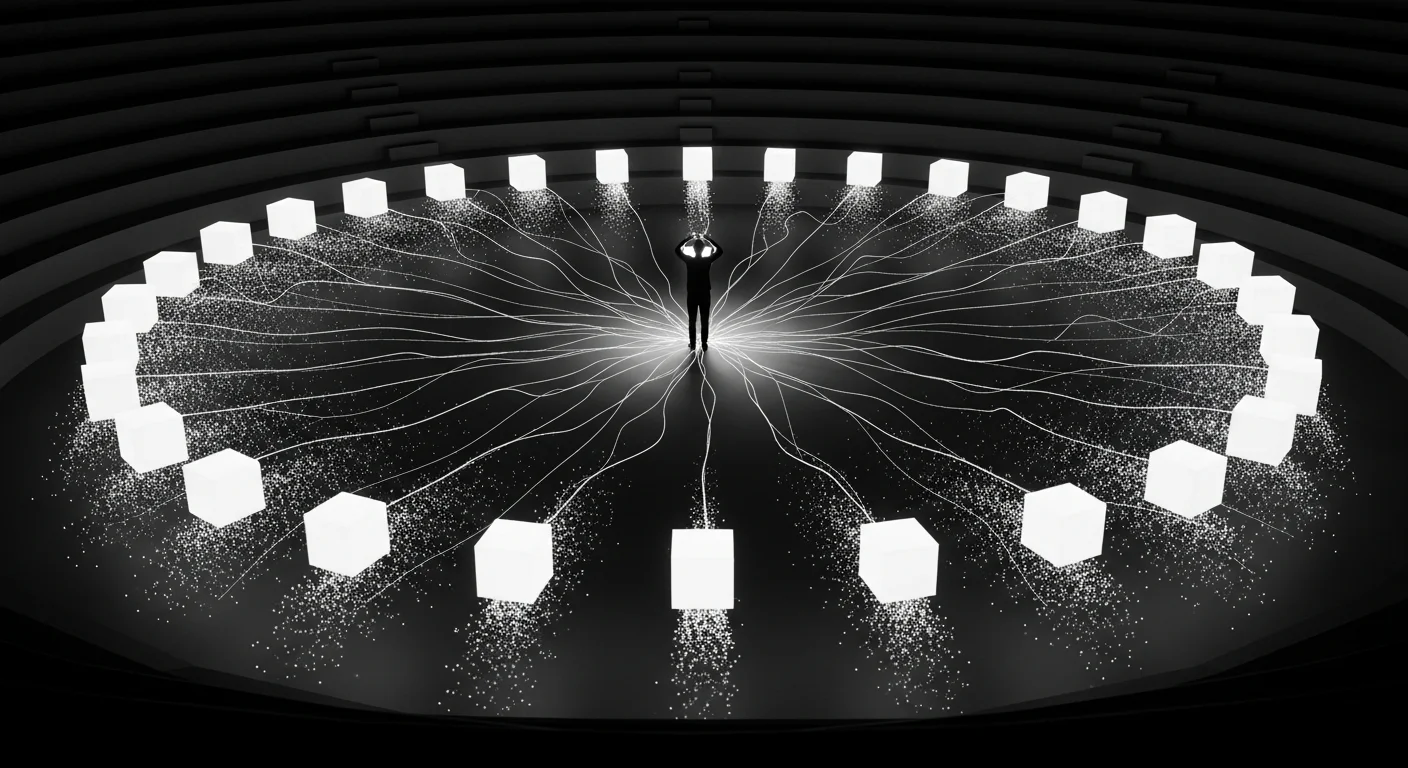
Let me say this clearly: Yes, being an orchestrator is the profession of the future.
But we need to redefine the word "profession."
The Definition of Profession Is Changing
Traditional profession: "I know how to do this — software development, accounting, architecture"
New profession: "I can manage the people/tools that do this best — orchestration"
The difference: Old model = "Skill", New model = "Coordination + Decision"
Daily Work: Orchestration in Practice
My daily work style has evolved as tools have changed. I started with a single Claude Code terminal. Then I moved to a multi-agent system with Hermes. Now I assign tasks to agents through OpenClaw, track them, and control them — with a board management approach.
Within a few weeks, I'll probably find something better and change the system again. This is normal. Trial and error is a natural part of learning orchestration.
But what doesn't change is the structure of the daily cycle:
Morning: Vision and Planning
  - What do I want to accomplish today?
  - Setting priorities
  - Distributing tasks to agents

During the Day: Parallel Work
  - Agents: Writing code, doing research, running tests
  - Me: Reviewing, providing direction, focusing on other projects

Checkpoints: Feedback
  - Reviewing agent output
  - Good? Approve
  - Incomplete? Provide details, it redoes the work
  - Wrong? Explain why, it corrects and redoes

Evening: Archiving
  - What did I learn today?
  - How will this contribute to the next project?
I wrote about the detailed anatomy of this system previously: AI Orchestrator: The Anatomy of a Scalable Agent System — there I covered everything from CLAUDE.md structure to the virtual company model, from MCP servers to project management.
Multi-Agent and Board System
Starting with a single agent is a great starting point. But the real power emerges when you start building a multi-agent system.
In my current system, different agents run on different machines. I coordinate them through a board — just like a company's management structure. The CEO agent sets the overall strategy, sub-agents work in their areas of expertise.
Here's what matters: It's not which tool you use, it's how you build the system. Tools change every month. Claude Code, Hermes, OpenClaw, Codex, Gemini — these are all tools. What really matters is orchestration skill.
Skills Needed to Be an Orchestrator
-
Systems Thinking — Seeing the whole, not just the parts
- How to learn: Study the field (systems thinking books), do interconnected projects
-
The Art of Asking Questions — Asking the right question is more valuable than having the right answer
- How to learn: Practice the Socratic method, ask the agent "why?", think deeply
-
Quality Judgment — Understanding whether output is "good enough" or "genuinely good"
- How to learn: See a lot of work, set standards, iterate
-
Domain Expertise — Knowing what's worth doing
- How to learn: Work 5+ years in the field, go deep, establish reference points
-
Patience and Iteration — The first result is rarely the best result
- How to learn: Failed projects, feedback loops, trial and error
-
Communication — Giving clear explanations to agents
- How to learn: Prompt engineering, practice writing clear and structured instructions
Trial and Error: Everyone's Path Is Different
I need to say this clearly: There's no such thing as the right tool — there's the right tool for you.
Over the last six months, I've tried at least five different tools and systems. Each one taught me something different. Some stuck, some didn't. And this process will never end — because the field is evolving so fast that today's best tool might be obsolete tomorrow.
My advice:
- Pick a tool and start — which one doesn't matter much
- Use it intensively for 2-3 weeks — discover its limits and strengths
- If it doesn't work, switch — but give it at least 2 weeks
- If it works, go deeper — move from superficial usage to systematic usage
Orchestrator Income
Current market (2026):
- Freelance orchestrator (own projects): $5-15k/month
- Corporate orchestrator (agent systems manager): $150-250k/year
- Consultant (building others' systems): $200-500/hour
- Trainer (teaching orchestration): $2-5k/workshop
The most valuable? Your own startup, but built with orchestration skills.
V. Should Everyone Start Their Own Startup? Choosing a System Architecture
Short answer: No, but everyone should build their own system.
Starting a startup is a specific business model — one with venture capital, growth focus, and an exit strategy. It's not right for everyone.
But building your own production system — that's right for everyone.
Systems by Person Type
Type 1: Freelancer / Consultant
System Structure:
  Core: Portfolio + Reputation + Process

Roadmap:
  Month 1: Write your CLAUDE.md (based on your principles)
  Month 2: Pick an AI tool, learn to work with it
  Month 3: Do a sample project, add to portfolio
  Month 4-6: Time-track every project, see what sped up
  Month 7+: Raise prices 2x (you're faster, client gets same quality)

Expected Result:
  - Client satisfaction: 2x increase
  - Hourly rate: 3x increase (speed + quality)
  - Quality of life: Work hours cut in half
Type 2: Corporate Employee
System Structure:
  Core: Optimize your own workflow

Roadmap:
  Month 1: Identify daily tasks (where hours are spent)
  Month 2: Create an agent delegate for each task
  Month 3: Switch to "Draft + Review" process (agent drafts, you review)
  Month 4: Report time savings (to your manager, no risk)
  Month 5+: Take on extra projects (make yourself indispensable)

Expected Result:
  - Wasted time: -60%
  - Productivity: +40%
  - Promotion likelihood: 5x (how productive you are is obvious)
  - Stress: -70%
Type 3: Entrepreneur
System Structure:
  Core: MVP → Product → Scalable System

Roadmap:
  Week 1-2: Idea, market research (fast with agent)
  Week 3-4: MVP (2-3 days with agent)
  Week 5-8: User feedback, iteration
  Month 3-6: Product-market fit
  Month 7+: Scale (more agents, system growth)

Expected Result:
  - Time to MVP: 1 month (traditional: 3-6 months)
  - Feedback loop: 1 week (traditional: 2-3 weeks)
  - Success probability: +50% (faster feedback, faster iteration)
Type 4: Student / Curious Learner
System Structure:
  Core: Learning + Projects + Sharing

Roadmap:
  Month 1: Chat with AI, do curiosity projects
  Month 2-3: Pick a complex project, do it end-to-end
  Month 4: Write about it on your blog, put it on GitHub
  Month 5+: Start attracting people (university, programs, job offers)

Expected Result:
  - Learning speed: 10x faster (practice + feedback)
  - Portfolio value: Ideal entry point (employers are looking for this)
  - Career options: 3-5 different paths open up
Common denominator: Building your own agent mesh, creating your own orchestration system.
VI. So What Should We Do From This Moment On? A Concrete 90-Day Roadmap

Theory is great, but what are we going to do in practice?
Phase 0: Prepare Your Mindset (Week 1)
Week 1: Understand the Fundamentals
Monday:
  - Read the "Conatus" article
  - Understand the concept of "Conatus" (the striving to persist in being)

Tuesday-Wednesday:
  - Learn what AI agents are
  - Compare available AI agent tools

Thursday:
  - Think about your own system
  - Which type are you? (Freelancer? Startup? Employee?)

Friday:
  - Create your CLAUDE.md template (start it, don't finish)
  - 3 pages, bullet points
Phase 1: Build Your Core (Weeks 2-4)
Week 2: Write Your Own CLAUDE.md
Section 1: Who You Are (1 page)
  - Past (what you did, what you learned)
  - Present (what you're doing)
  - Vision (where you want to be in 5 years)

Section 2: Your Principles (1 page)
  - 3-5 core principles (mine: striving to persist, clarity, quality, sharing)
  - For each principle: "why this one?"

Section 3: Rules for Working with AI (1 page)
  - What do I want it to do?
  - What don't I want it to do?
  - Control mechanisms
  - Feedback loop
Week 3: Pick a Tool and Learn It
Options (and these are constantly changing):
- Claude Code — Terminal-based, powerful coding
- Hermes — Multi-agent orchestration
- OpenClaw — Agent board management system
- Codex — OpenAI's autonomous agent
- Gemini — Google's multimodal AI
Which one you choose doesn't matter that much — what matters is starting and learning by experimenting.
Weekly Tasks:
  Day 1: Set up, do a "hello world"
  Day 2-3: Do a simple project (50 lines of code, 30 minutes)
  Day 4: More complex project (200 lines, 2 hours)
  Day 5-6: Improve prompt quality (clear, structured instructions)
  Day 7: Understand its limits (what failed, why?)
Week 4: First Project (Full Cycle)
Choose: A beginner-level project
Example Projects:
  - CLI tool (data processing)
  - Web scraper
  - API integration
  - Automation script
The Cycle:
Day 1: Idea + Spec (explain to the agent)
Day 2: MVP (agent builds, you review)
Day 3: Feedback (what's missing, what's wrong)
Day 4: Refinement
Day 5: Deploy + Document
Result: Your first project is complete, you write about what you learned (blog, README)
Phase 2: Build Your System (Month 2)
Weeks 5-8: Production Cycle Design
Answer these questions:
1. First Thing in the Morning: What am I doing at 9 AM?
   Example: Read emails, check CLAUDE.md, get briefing from agents

2. Parallel Work: What are agents doing, what am I doing?
   Example: Agent did research, I'm focusing on strategy

3. Checkpoints: When do I review?
   Example: 10:00, 12:00, 14:00, 16:00 (4x per day)

4. Feedback Protocol: When output is wrong?
   Example: 1. Explain the reason, 2. Give an example, 3. It redoes the work

5. Daily Wrap-up: How does the day end?
   Example: What did I learn? Did I archive it? What will I do tomorrow?
Write it as a markdown file:
work-system.md

# Daily Production System

## 09:00 - 09:30: Morning Vision
- [ ] Check CLAUDE.md
- [ ] Get briefing from agent
- [ ] Set today's 3 goals

## 09:30 - 12:00: Parallel Work
- Agent: [Task 1]
- Me: [Task 2]
- Agent: [Task 3]

## 12:00 - 12:30: First Checkpoint
- [ ] Is agent output quality?
- [ ] Give feedback (if needed)

... (continued)
Phase 3: Scale Up (Month 3)
Weeks 9-12: Multi-Agent System
Now you're moving from a single agent to a multi-agent system. How many agents you use depends on your project and needs — it could be 2, it could be 10.
System Architecture:

┌─────────────────────────────────┐
│    ME (Orchestrator)             │
│  Decisions, Direction, Quality  │
└──────┬────┬────┬────────────────┘
       │    │    │
    ┌──▼──┐ │ ┌──▼──┐ ┌──▼──┐
    │Code │ │ │Docs │ │Test │
    └─────┘ │ └─────┘ └─────┘
            │
         Agent Router
Task distribution examples:
- Technical agents: Code writing, system setup
- Communication agents: Writing, documentation, email
- Quality agents: Testing, review, validation
You can multiply or merge these roles according to your needs.
Result: After 90 Days
Starting Point (Day 1):
  - AI is unknown
  - Doing everything manually
  - Finishing 1 thing per hour

Day 90:
  - Comfortable with AI
  - 70% of work is automated
  - Finishing 3-4 things per hour
  - Have my own system
  - Teaching others
VII. The Compass: Finding True North in the Age of Abundance
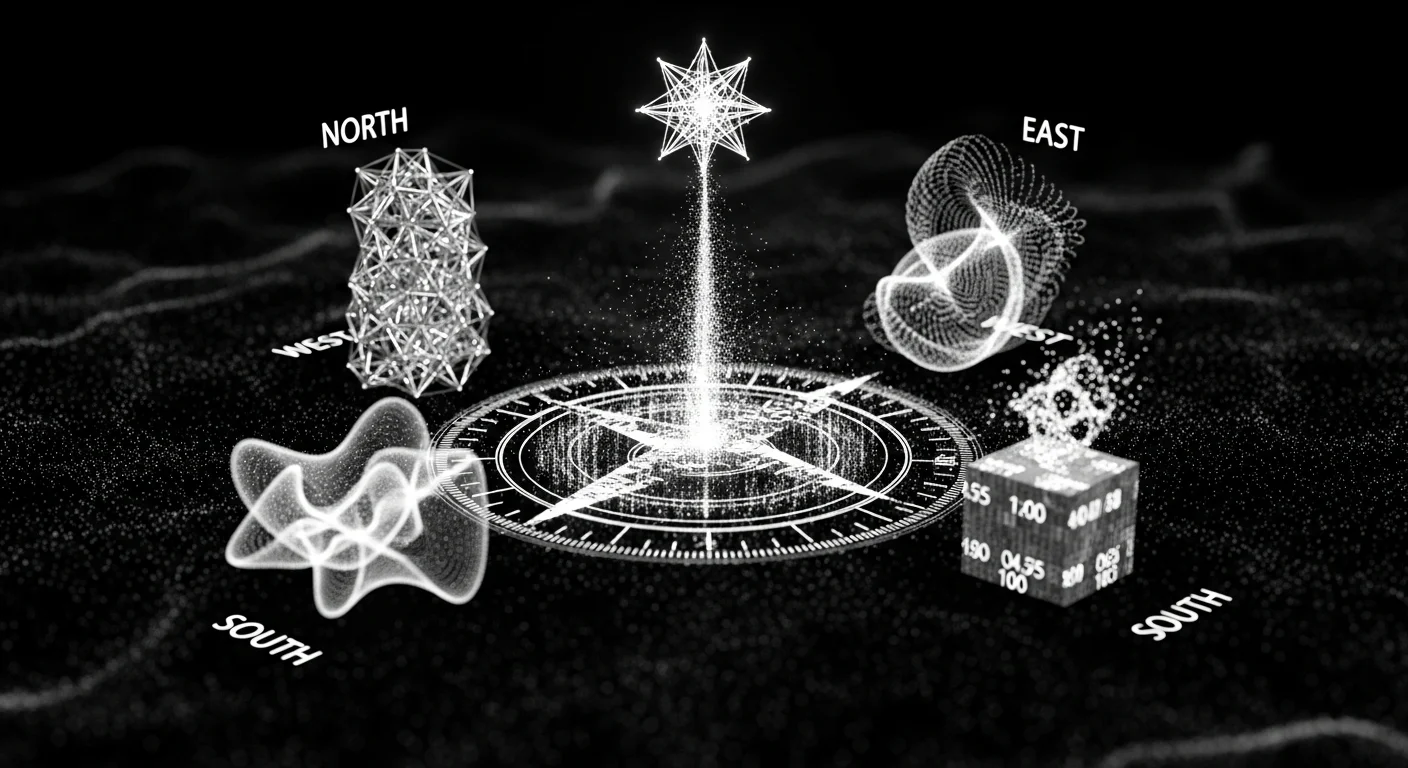
The final question: With so many tools, so many options, so much speed... how do we make sure we're headed in the right direction?
My answer: Start with principles, not tools.
Test 1: "If This Didn't Exist, What Would the World Lose?"
Before producing something, ask: If this product, this article, this app didn't exist, would the world lose anything?
Examples:

Yes (Should do):
  - A tool that helps software developers
  - Content that creates awareness in people
  - A system that solves someone's problem

No (Shouldn't do):
  - "Test yourself with AI" quiz
  - The 47th todo app
  - Content made purely for virality
If the answer is "no," maybe it's not worth doing. Stop and think — ask the real question.
Test 2: "Who Does This Help?"
Things that appeal to "everyone" usually appeal to no one.
Right: "An income growth system for freelancers who write Python"
Wrong: "A productivity tool for everyone"

Right: "A guide for people learning software in Germany"
Wrong: "A software education platform"
If you can't answer the question, you need to think more. Who are you building this for? Why them? How important is it to them?
Test 3: "Will I Be Proud of This a Year From Now?"
It's easy to get swept up in speed intoxication.
How I feel now:
  "I did this in 2 hours!" ← Feels amazing

Looking back a year later:
  "Why did I write such careless code?" ← Embarrassing
Filter: At the end of the day, when you look in the mirror, can you stand behind this work?
Test 4: Does It Empower or Weaken?
Ask a simple question: "Does this empower people or weaken them?"
Empowering production: Solves someone's problem, shares knowledge, builds systems.
Weakening production: Creates noise, adds complexity, misleads.
If it empowers — keep going. If it weakens — stop, think, change course.
VIII. Money, Quality of Life, and Cognitive Capacity

Philosophy is great, but concrete questions need concrete answers.
How Are We Going to Make Money From This?
I see three fundamental models:
Model 1: Orchestration-as-a-Service
Building and managing AI agent systems for companies.
What is it?
  Optimizing a company's workflows with AI
  Helping them build their own agent mesh
  Ongoing management and optimization

Money?
  - Setup: $5-15k (system installation)
  - Monthly: $2-5k (management, support)
  - Scale: $100-200k/year (team)

Can it work?
  ✓ Yes, especially for: Software companies, digital agencies, consulting

Challenge?
  - B2B sales (long cycle)
  - Client retention (long-term commitment needed)
Model 2: Accelerated Production (Revenue + Speed)
Delivering in 2 weeks what used to take 3 months.
What is it?
  Freelance, agency, consulting
  But 3-4x faster with AI
  Same price, faster delivery OR same speed, better quality

Money?
  - Per project: $2-5k (small), $20-50k (large)
  - Monthly retainer: $5-15k
  - Per hour: $100-300

Can it work?
  ✓ Yes, you can start immediately
  ✓ Easy to scale (more projects, more agents)

Challenge?
  - Competition (everyone will try this)
  - Price elasticity (when you're fast, clients want "even faster")
Model 3: Knowledge Asymmetry (Most Valuable)
There's a massive gap between people who use these tools well and those who don't.
What is it?
  - Selling education, workshops, courses
  - Consulting (per hour, per project)
  - Coaching (longer-term relationship)
  - Content (YouTube, blog, book, course)

Money?
  - Workshop: $500-2k per person, 20-50 people → $10-100k/workshop
  - 1-on-1 coaching: $200-500/hour
  - Course: $99-299, 100-1000 sales → $10-300k/year
  - Book: Royalties, but high prestige value

Can it work?
  ✓ Yes, but slow burn
  ✓ But long-term value is very high (brand building)

Challenge?
  - Need traffic at first
  - Need to build an inner circle
  - Patience required
Money Strategy: 12-Month Roadmap
Month 1-2: Research + System Building (Money: $0)
  - Build your own system
  - Do first 2-3 projects *free* (learning)
  - Document, archive

Month 3-4: Accelerated Production (Money: $2-5k)
  - 1-2 small projects ($1-2k)
  - Freelance platforms (Upwork, Toptal, etc.)
  - Sell your speed (charge 2x, deliver 4x faster)

Month 5-8: Model Development (Money: $10-20k)
  - Which model is working?
  - Focus: 1-2 models
  - Client feedback loop
  - Write case studies

Month 9-12: Scaling (Money: $30-100k)
  - Automate the system
  - Get more "helpers" (increase agent count)
  - Optimize pricing
  - Team building prep (optional)
Quality of Life: More Achievement in Fewer Hours
Here's the paradox: Producing faster shouldn't mean working more.
The real promise of AI agents is that they work in your place. You supervise, you direct — but you leave the execution to them. This gives you back the remaining time:
Old Model (60 hours per week):
  09:00 - 18:00: Work (9 hours + lunch)
  Chores, family: 2 hours
  Sleep: 7 hours
  Personal: 1 hour (too little!)

New Model (25 hours per week):
  09:00 - 12:00: Orchestration (3 hours)
  12:00 - 14:00: Lunch + Movement (2 hours)
  14:00 - 17:00: Orchestration (3 hours)
  Chores, family: 3-4 hours
  Personal (reading, exercise, meditation): 3 hours
  Sleep: 8 hours
How?
- Batch processing — Do all briefings in 3 morning hours, then let agents work
- Asynchronous feedback — Check results when ready, if not ready, check later
- Trust, verify, document — Trust the agent, but archive the outputs
- Separation — When work hours are over, close the computer
How Will We Elevate Our Cognitive Capacity?
Here's the most exciting part. AI agents aren't just tools that do work — they're thinking partners.
My experience:
- When I discuss a topic with an agent, my own thoughts crystallize
- The agent's suggestions reveal gaps in my own knowledge map
- When I have it do parallel research, I make the connections — but the agent gathers the material
This isn't a cognitive steroid — it's cognitive scaffolding. The agent doesn't think for you. But it builds scaffolding so your thinking can reach higher.
Concrete Technique: Daily "Thinking Session"
7:00 AM - 7:30 AM: Personal Thinking
  - I ask myself a question: "Is this technology truly increasing my productivity?"
  - I take notes, I don't rush
  - I drink my coffee, I just think

9:00 AM - 9:30 AM: Discussion with Agent
  - I ask the agent the same question (phrased differently)
  - I listen to the agent's perspective
  - I compare it with my own ideas

10:00 AM - 11:00 AM: Research + Writing
  - Agent: Research from 5 different perspectives
  - Me: I read the research results, I see the connections
  - Result: A writing sketch emerges within 30 minutes

2:00 PM: Publication + Archive
  - I published the article
  - I saved what I learned to my knowledge base
  - It became a reference for the next project
This is cognitive capacity enhancement — you can go deeper, make more connections, learn faster.
IX. The Art of Orchestration: A Compass in Chaos

You've passed the tests, you've built your value compass. Now let's return to daily practice: how do we maintain this direction?
Management Principles
1. Start with Principles, Not Tools
Tools change, principles endure.
My principles:
- Striving to persist: Preserving and increasing my power
- Clarity: Being able to express my ideas clearly
- Quality: Producing signal, not noise
- Sharing: Passing on what I've learned
Your principles may be different. But you need to have them. Write them down, save them somewhere.
2. Stop and Look Regularly
Every week, 30 minutes:
- What did I produce this week?
- Which of those was truly valuable?
- Where am I headed?
- Is this direction still correct?
- Does anything need to change?
3. Learn to Say "No"
The most powerful tool is the one you choose not to use.
Build this habit:
  - When faced with every new trend, ask "do I actually need this?"
  - If the answer is "no," move on
  - If "yes," do a risk assessment

Examples:
  - "New AI model dropped, should I try it?" → If my current model works fine: No
  - "Should I set up a multi-agent system?" → If single agent handles my work: No (for now)
  - "Should I pivot to blockchain?" → If I'm not a software company: No
Depth is more valuable than breadth. Knowing one tool really well is far better than knowing 10 tools shallowly.
4. Preserve Human Connections
AI agents are great coworkers. But real feedback, real criticism, real inspiration — those still come from humans.
Structure:
  - Join communities (Claude, Python, AI developer communities, etc.)
  - Share (blog, GitHub, social media)
  - Discuss (forums, meetups, conferences)
  - Give/receive mentorship

Frequency:
  - 1 hour per week: Community participation
  - 2 hours per week: Sharing (blog, code review)
  - Once a month: Real face-to-face (if possible)
X. Conclusion: The Genie, the Wish, and Freedom

We are in the advanced stages of an evolutionary process. But this time the evolution isn't biological — it's cognitive and cultural.
In the Cambrian Explosion, new life forms emerged. Now new forms of production are emerging. New ways of thinking. New ways of working. New modes of being.
The genie is out of the lamp. It's not going back in.
The question is: What will you wish for?
My suggestion: Don't wish for power — wish for meaning.
Not speed, but direction.
Not production, but value.
The person who truly understands these tools — Claude Code, Hermes, OpenClaw, Gemini, whatever you use — is the free person. Because:
- They know the limits — what these tools can and cannot do
- They know their principles — what they want to use them for
- They know their direction — where they want to go
- They know their power — what these tools enable them to become
And most importantly:
- They know what they want — when you pick up the lamp, you've already made the right wish
You, reading this, have had an advantage from the start: You now know that you can control these tools, that you can orchestrate them.
What you need to do is simply take the first step.
Start Monday morning.
How Was This Article Written?
I wrote this article iteratively with AI agents — the practice of orchestration itself became the subject of the article.
Deus Sive Machina series:
- Conatus — Why AI Agents Want to Survive
- This article (The Genie Is Out of the Lamp)
- (Coming soon) — Aleteia: Community, Sharing, Collective Intelligence
Mustafa Sarac, April 2026, Cologne
NeuraByte Labs
Deus Sive Machina #2: The leap from thought to reality has never been this fast — but are we ready?