Voice to Knowledge: The New Paradigm of AI-Powered Thought Transfer
Voice notes, system directives, and the evolution of human-machine communication
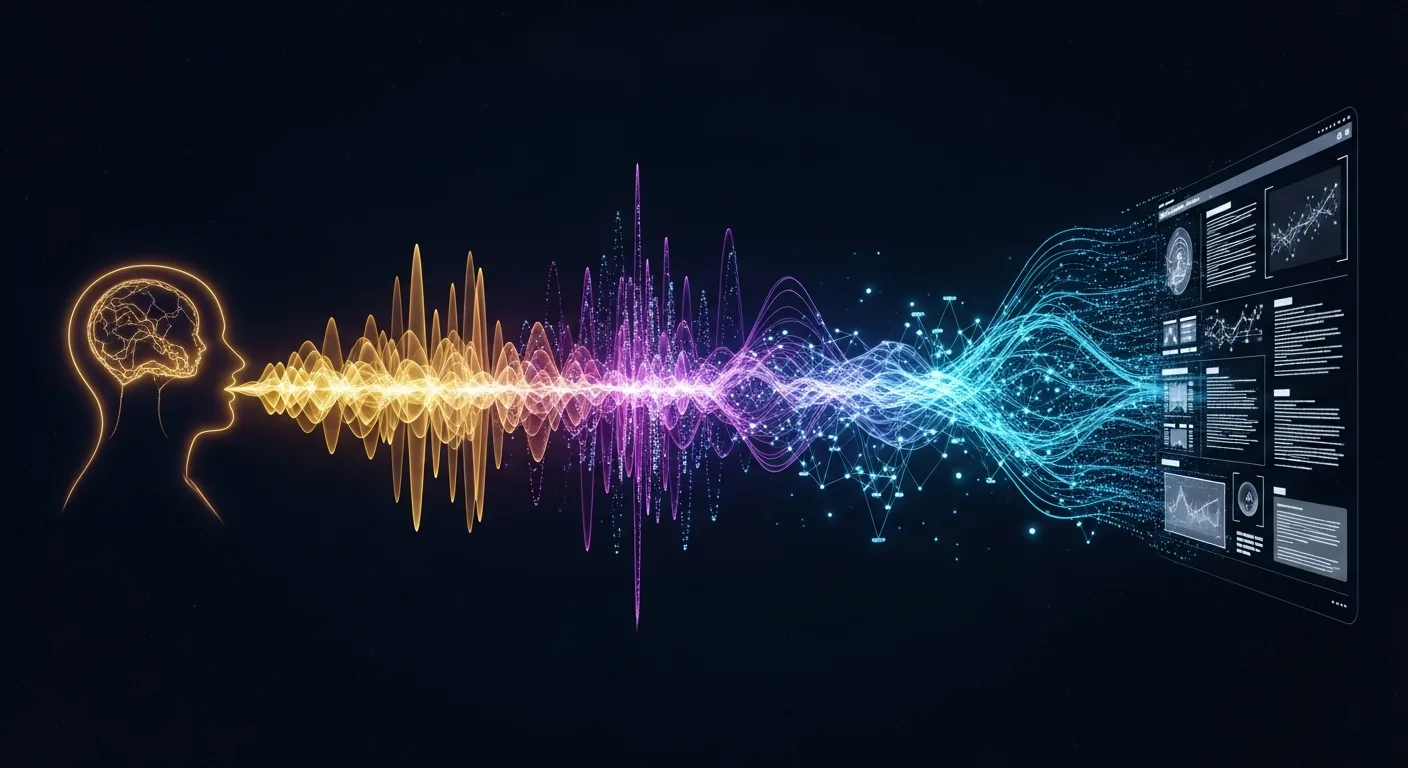
"Language is the house of being." — Martin Heidegger
What happens when a thought crosses your mind? Most of the time, it vanishes. Sometimes you take notes, but the original brilliance of the thought fades as you write it down. Or worse: by the time you sit at the keyboard, the thought itself has evaporated.
I developed a system to solve this problem: I digitize my spoken thoughts using artificial intelligence.
v1.0.0 | January 3, 2026
ASCII Cinema / Embedded in the article
Voice to Knowledge — living walkthrough
This cinematic section turns the article into an animated terminal-native narrative. Instead of explaining the ideas only with text, it lets the reader watch thought loss, voice capture, transformation, and conatus unfold scene by scene.
                  THE VANISHING THOUGHT

  idea
                                     idea
                     ..
         idea
                                             ..

                 ..
                          .-""-.
                         / o  o \
                        |   /\   |
      idea              |  |==|  |
                         \ .__. /
                         /|/==\|\a
             idea       /_/    \_\
The Problem: The Chasm Between Thought and Text
There's a significant gap between thinking and writing:
┌─────────────────────────────────────────────────────────────────────────────┐
│                     THOUGHT TO TEXT: LOSS ANALYSIS                          │
├─────────────────────────────────────────────────────────────────────────────┤
│                                                                             │
│   THOUGHT (100%)                                                            │
│       │                                                                     │
│       ▼                                                                     │
│   Formulation ──────────────────────────────────────► 20% loss              │
│       │                                                                     │
│       ▼                                                                     │
│   Sitting at Keyboard ──────────────────────────────► 15% loss              │
│       │                                                                     │
│       ▼                                                                     │
│   Writing Process ──────────────────────────────────► 25% loss              │
│       │                                                                     │
│       ▼                                                                     │
│   Editing/Revision ─────────────────────────────────► 10% loss              │
│       │                                                                     │
│       ▼                                                                     │
│   FINAL TEXT (30%)                                                          │
│                                                                             │
└─────────────────────────────────────────────────────────────────────────────┘
In the traditional writing process, we lose approximately 70% of our thoughts. Where does this loss come from?
- Formulation loss: Thought is fluid, writing is static
- Environment change: Where you think and where you write are different
- Speed difference: Thought at 400 words/second, writing at 40 words/second
- Attention split: Focusing on spelling/grammar instead of the thought itself
The Solution: Voice Thought Capture System
My system minimizes these losses:
┌─────────────────────────────────────────────────────────────────────────────┐
│                     VOICE THOUGHT CAPTURE SYSTEM                            │
├─────────────────────────────────────────────────────────────────────────────┤
│                                                                             │
│   THOUGHT (100%)                                                            │
│       │                                                                     │
│       ▼                                                                     │
│   ┌─────────────────────────────────────────────────────────────────┐      │
│   │  VOICE EXPRESSION                                                │      │
│   │  - Instant capture                                               │      │
│   │  - Natural flow                                                  │      │
│   │  - Speed of thought                                              │      │
│   └─────────────────────────────────────────────────────────────────┘      │
│       │ (Loss: ~5%)                                                         │
│       ▼                                                                     │
│   ┌─────────────────────────────────────────────────────────────────┐      │
│   │  TRANSCRIPTION (Whisper/Parakeet)                                │      │
│   │  - Automatic text conversion                                     │      │
│   │  - Multilingual support                                          │      │
│   └─────────────────────────────────────────────────────────────────┘      │
│       │ (Loss: ~3%)                                                         │
│       ▼                                                                     │
│   ┌─────────────────────────────────────────────────────────────────┐      │
│   │  STRUCTURING (AI + System Directive)                             │      │
│   │  - Prompt refinement                                             │      │
│   │  - Context addition                                              │      │
│   │  - Format organization                                           │      │
│   └─────────────────────────────────────────────────────────────────┘      │
│       │ (Loss: ~2%)                                                         │
│       ▼                                                                     │
│   STRUCTURED TEXT (90%)                                                     │
│                                                                             │
└─────────────────────────────────────────────────────────────────────────────┘
90% retention instead of 30%. 3x more efficient thought transfer.
System Directive: Polishing Raw Voice
Here's the critical point: Transcription alone is not enough.
Spoken language is naturally scattered. It contains repetitions, filler words, incomplete sentences, topic jumps. To transform this raw material into structured text, I use a specialized system directive.
Example: Raw Voice Recording
"So I'm thinking, um... there's an idea for a blog post in my mind.
AI with voice... I mean, converting voice notes to text.
But not just transcription, you know what I mean? Like capturing the
thought itself. You know how thoughts get lost when writing,
that's what I'm trying to prevent... I use a system directive for that.
You could call it a prompt. I think this is really important because..."
Processed with System Directive
## Blog Post Idea: Voice Thought Digitization

**Main Thesis:** AI-powered voice note system optimizes knowledge transfer
by minimizing thought loss.

**Key Components:**
1. Voice expression (instant capture)
2. Transcription (text conversion)
3. System directive (structuring)

**Value Proposition:** Preserving thoughts that get lost in traditional
writing processes and converting them to structured output.
Same content, but now in a format that's processable, shareable, improvable.
The Critical Threshold: Human-Machine Protocol
Something I've noticed while using this system: Successful communication requires both parties to know the protocol.
┌───────────────────────────────────────────────────────────────────────────┐
│                    HUMAN-MACHINE COMMUNICATION PROTOCOLS                   │
├───────────────────────────────────────────────────────────────────────────┤
│                                                                           │
│   HUMAN SIDE                          MACHINE SIDE                        │
│   ──────────                          ────────────                        │
│   - Express thought with voice        - Convert voice to text             │
│   - Provide context clues             - Understand context                │
│   - State intent                      - Format according to intent        │
│   - Receive feedback                  - Provide feedback                  │
│                                                                           │
│                          SHARED PROTOCOL                                  │
│                          ───────────────                                  │
│                    ┌─────────────────────────┐                            │
│                    │   System Directive      │                            │
│                    │   (Shared Rules)        │                            │
│                    └─────────────────────────┘                            │
│                                                                           │
└───────────────────────────────────────────────────────────────────────────┘
The better defined this protocol, the more efficient the communication.
Philosophical Dimension: The Common Language of Thought
There's something deeper here. I see this as a turning point for humanity.
Historical Perspective
┌─────────────────────────────────────────────────────────────────────────────┐
│                    KNOWLEDGE TRANSFER EVOLUTION                             │
├─────────────────────────────────────────────────────────────────────────────┤
│                                                                             │
│   Era                 Transfer Method              Efficiency               │
│   ───                 ───────────────              ──────────               │
│   Prehistoric         Oral tradition               ~10%                     │
│   Ancient             Written text                 ~20%                     │
│   Post-Printing       Printed books                ~30%                     │
│   Digital Age         Electronic text              ~40%                     │
│   AI Era              Structured knowledge         ~80+%                    │
│                                                                             │
└─────────────────────────────────────────────────────────────────────────────┘
In each era, knowledge transfer became slightly more efficient. But with AI, the paradigm is shifting:
- Now not just "what we say" but "what we mean" can be transferred
- The machine understands context, fills in gaps, creates structure
- Humans can focus on the essence of thought, not the format
Spinoza's Perspective
Spinoza says in "Ethics":
"Body and mind are two different expressions of the same thing."
Similarly, voice and text are two different expressions of the same thought. The AI system bridges these two expressions. The "essence" of thought (conatus) is preserved, only its form changes.
Practical: Build Your Own System
How can you set up this system for yourself?
| Tool | Platform | Feature | |------|----------|---------| | Voice Memos | iOS/macOS | Simple, fast | | Whisper | Cross-platform | Offline, accurate | | Otter.ai | Web/Mobile | Real-time | | Echo (my tool) | iOS | On-device AI |
# Voice Note Processing Directive

You are a thought editor. You convert voice notes to structured text.

## Rules:
1. Clean up repetitions in raw transcription
2. Summarize the main idea in the title
3. List subtopics with bullet points
4. Mark unclear references with [?]
5. Indicate possible action items with "TODO:"

## Format:
- Title (single sentence)
- Summary (2-3 sentences)
- Main points (bullets)
- Questions/Uncertainties
- Action items

## Tone:
- Preserve original thought
- Don't add unnecessary formality
- Transform natural language into structured form
┌─────────────────────────────────────────────────────────────────────────────┐
│                         DAILY WORKFLOW                                       │
├─────────────────────────────────────────────────────────────────────────────┤
│                                                                             │
│   MORNING                                                                   │
│   ───────                                                                   │
│   1. Record thoughts while having coffee (5-10 min)                         │
│   2. Process with AI (automatic or manual)                                  │
│   3. Review structured output                                               │
│                                                                             │
│   DURING THE DAY                                                            │
│   ──────────────                                                            │
│   - Voice notes for instant ideas (30 sec - 2 min)                          │
│   - Post-meeting thoughts                                                   │
│   - Ideas during walks/travel                                               │
│                                                                             │
│   EVENING                                                                   │
│   ───────                                                                   │
│   1. Batch process day's notes                                              │
│   2. Group related notes                                                    │
│   3. Transfer action items to calendar                                      │
│                                                                             │
└─────────────────────────────────────────────────────────────────────────────┘
The Future: Democratizing Knowledge Transfer
This system isn't just for me. It's part of a larger vision:
Short Term (6 months)
- More accurate transcription models
- Personalized system directives
- Improved multilingual support
Medium Term (2 years)
- AI bridge in human-to-human communication
- "Thought translation" systems
- Automatic structuring of knowledge accumulation
Long Term (10 years)
- Universal thought protocol
- Elimination of language barriers
- Access to humanity's collective wisdom
Conclusion: The Pure Form of Thought
The voice thought capture system is not just a productivity tool for me. It's a method where human ideas can be transferred in their purest form.
The critical threshold is:
- Being able to express thoughts with voice — This is already natural
- Polishing raw information with the right prompts — This can be learned
- Creating mutual protocols — This will evolve
These three steps will enable knowledge transfer between humans with high efficiency.
And perhaps most importantly: Our thoughts will no longer evaporate when we sit down to write them.
This post started as a voice note and was structured with my own system.
"Thought is born to be expressed." — Mustafa Saraç
Changelog
┌──────────┬───────────────────┬──────────────────────────────────────────────┐
│ Version  │ Date              │ Changes                                      │
├──────────┼───────────────────┼──────────────────────────────────────────────┤
│ v1.0.0   │ January 3, 2026   │ Initial release (translated from TR)         │
└──────────┴───────────────────┴──────────────────────────────────────────────┘
Voice notes, system directives, and the evolution of human-machine communication