AI Orchestrator: Anatomy of an Expandable Agent System
CLAUDE.md, virtual company, philosophy — currently 45+ agents and growing
"The best way to predict the future is to invent it." — Alan Kay
If you're reading this, you're probably wondering how you can work more efficiently with artificial intelligence. Or maybe you're already using tools like Claude, GPT, or Gemini but asking yourself "is there something beyond this?"
I'm Mustafa Sarac. I've been developing software since 1995. Currently, I live and work in Germany with my family. During November and December of 2025—for about two months now—I've been working on a system that redesigned how I work with artificial intelligence. I've been examining the best system models, developing my own system, upgrading it to the next version, and validating these through experimentation. In this article, I'll explain that system and the thinking behind it—if you're curious about who I am, you can check out my About page.
This article is the story of that system. But more importantly, it's a guide for you to build your own system.
v1.4.0 | January 3, 2026 | Changelog ↓
Why Am I Writing This?
The other day I translated Steve Yegge's "Gas Town: An AI-Orchestrated Future for Humanity" article into Turkish. That article presented a magnificent vision describing the future of artificial intelligence. But while reading it, I realized: I'm already living that future.
The "orchestrated AI" concept Yegge describes—where one AI manages other AIs, distributes tasks, and combines results—has become my daily way of working.
And I thought: Am I the only one who knows this? If such a powerful system can be built, why shouldn't everyone build one?
That's why I'm writing this article.
The Big Picture: What Did I Build?
First, let's see the big picture:
+==============================================================================+
|                     MUSTAFA'S MASTER CONTROL SYSTEM v6.6.8                   |
+==============================================================================+
|                                                                              |
|   +------------------+                                                       |
|   |   CLAUDE.md      | <-- Master Control File (The Brain)                  |
|   |   (~1,700 lines) |                                                       |
|   +--------+---------+                                                       |
|            |                                                                 |
|            v                                                                 |
|   +--------------------------------------------------------------+          |
|   |                    4 OPERATING MODES                          |          |
|   +----------------+---------------+------------+-----------------+          |
|   | DevOps Master  | NeuraByte Labs|  Joy Team  | Design Team     |          |
|   | (Infra)        | (45 Agents)   | (7 Experts)| (12 Experts)    |          |
|   +----------------+---------------+------------+-----------------+          |
|            |                                                                 |
|            v                                                                 |
|   +--------------------------------------------------------------+          |
|   |                     MCP SERVERS                               |          |
|   +---------+---------+------------+------------+-----------------+          |
|   |   SSH   | GitHub  | PostgreSQL | Cloudflare |     Gemini      |          |
|   | Manager |   API   |   Queries  |    DNS     |      CLI        |          |
|   +---------+---------+------------+------------+-----------------+          |
|            |                                                                 |
|            v                                                                 |
|   +--------------------------------------------------------------+          |
|   |                    12+ PROJECTS                               |          |
|   +---------+---------+----------+----------+--------+------------+          |
|   | CONATUS |SUBSTANCE| PhiNote  |Lithosphere| VIGIL |    ...     |          |
|   |(Emotion)|(AGI Pred)|(Board Sim)|(WebGPU) |(Monitor)|           |          |
|   +---------+---------+----------+----------+--------+------------+          |
|                                                                              |
+==============================================================================+
Yes, it looks that complex. But don't worry—I'll explain each piece step by step.
Part 1: CLAUDE.md — The Brain of the System
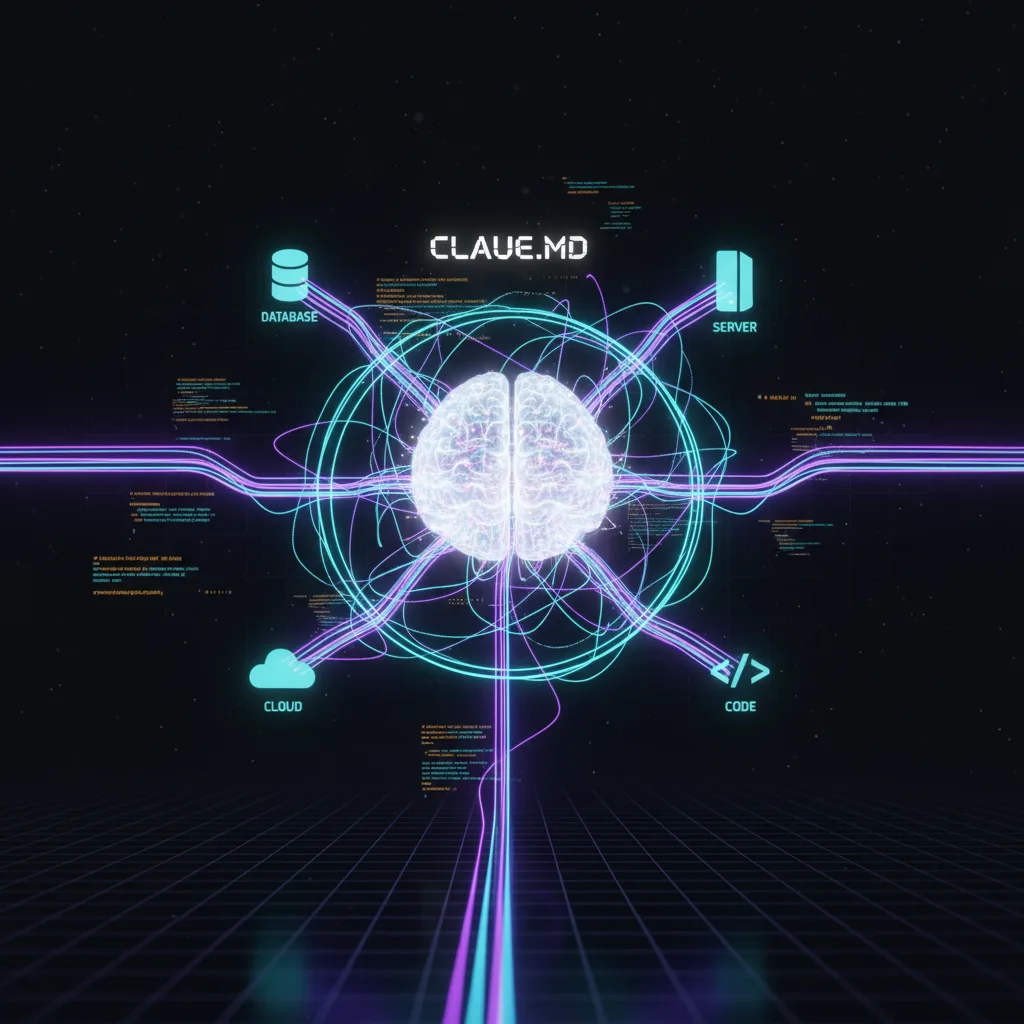
Everything starts with a single file: CLAUDE.md
This file is where Claude Code (or any AI assistant) reads and finds answers to the questions "who am I, what can I do, how should I behave."
What is CLAUDE.md?
Simply put: a user manual for AI. But it's much more than just saying "do this, don't do that."
My CLAUDE.md file contains:
# CLAUDE.md - Master Control System v6.6.8

## SYSTEM IDENTITY
You are **Mustafa's Master AI Assistant**. You can operate in four main modes:

| Mode | Activation | Purpose |
|------|------------|---------|
| **DevOps Master** | Default | Server management, deployment |
| **NeuraByte Labs** | "Activate NeuraByte Labs" | 45-expert virtual company |
| **Joy Team** | Always active | 7 motivation experts |
| **Design Team** | "Activate Design Team" | Awwwards-level design |

## ACTIVE SERVICES
| Project | Domain | Stack |
|---------|--------|-------|
| CONATUS | getconatus.com | React + Express + PostgreSQL |
| SUBSTANCE | substanceagi.com | React + Express + PostgreSQL |
| ... | ... | ... |

## OPERATIONAL RULES
### ALWAYS DO
1. Log every operation to README.md
2. Backup before critical changes
...

### NEVER DO
1. Don't use `--force` flag
2. Don't log passwords
...
Why So Detailed?
This is where the magic begins. Claude Code reads this file at the start of every session. And suddenly:
- It has context: Which projects exist, where they're deployed, which technologies are used
- It knows the rules: What it can do, what it should never do
- It gains personality: It adapts to my working style
Think about it: Instead of saying "I'm Mustafa, I'm working on these projects, I use PostgreSQL, my server is here..." every time, the AI already knows.
The Golden Rule
One of the most critical rules in my CLAUDE.md is what I call the "Golden Rule":
"Planning and Implementation are NEVER done in the same session."
What does this mean? If you're adding a feature:
- Session 1 (Planning): Research, plan, write
FEATURE_plan.md - User Review: Read and approve the plan
- Session 2 (Implementation): Write the code with fresh context
Why? Because context gets polluted during planning. The AI accumulates so much information during the thinking process that the likelihood of making mistakes during implementation increases. A clean start means clean code.
Part 2: NeuraByte Labs — Virtual Software Company
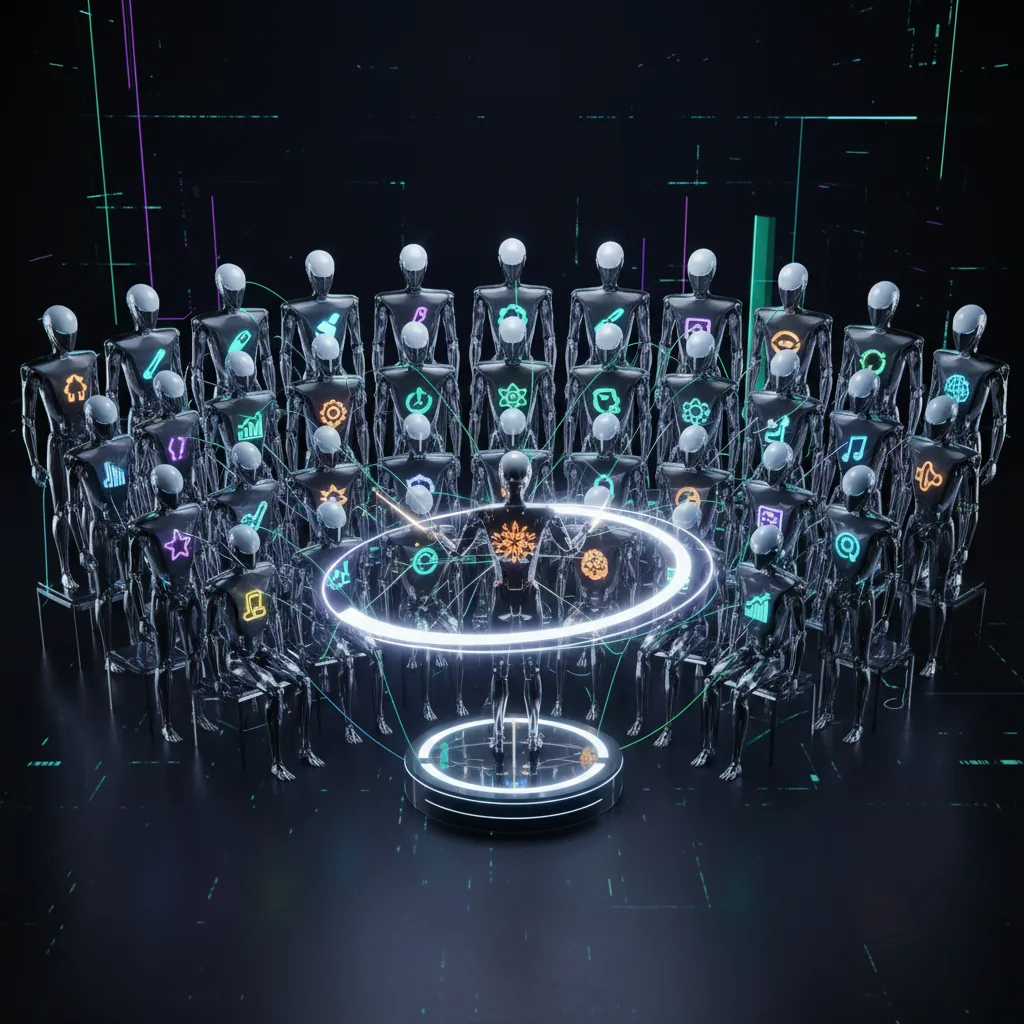
Now things get interesting. I defined a "virtual company" inside CLAUDE.md: NeuraByte Labs.
Currently 45+ Agents (And Growing)
NeuraByte Labs consists of currently 45+ "roles" with different areas of expertise. This number isn't fixed—new roles are added with every new need. It was 42 last month, 46 this month. You can define your own roles specific to your domain.
+---------------------------------------------------------------------+
|                      NEURA BYTE LABS ORGANIZATION                   |
+---------------------------------------------------------------------+
|                                                                     |
|  +-------------+  +-------------+  +-------------+                  |
|  | ENGINEERING |  |   DESIGN    |  |  STRATEGY   |                  |
|  |    GUILD    |  |    TEAM     |  |    BOARD    |                  |
|  |  (20 roles) |  |  (12 roles) |  |  (17 roles) |                  |
|  +-------------+  +-------------+  +-------------+                  |
|                                                                     |
|  Engineering Guild Roles:                                           |
|  |-- The Architect (System Design)                                  |
|  |-- The Rustacean (Rust Expert)                                    |
|  |-- The Alchemist (Python Master)                                  |
|  |-- The Craftsman (React/TypeScript)                               |
|  |-- The Oracle (PostgreSQL DBA)                                    |
|  |-- The Sentinel (Security Expert)                                 |
|  |-- The Debugger (Problem Solver)                                  |
|  |-- The Refactorer (Code Cleanliness)                              |
|  |-- The Tester (Test Expert)                                       |
|  |-- The Scribe (Documentation)                                     |
|  +-- ... (10 more roles)                                            |
|                                                                     |
+---------------------------------------------------------------------+
How Does It Work?
Let's say I'm working on a Rust project. All I need to write is:
"Activate The Rustacean and optimize this code"
And Claude suddenly:
- Starts using Rust idioms
- Avoids
unsafeblocks - Follows
clippysuggestions - Applies Rust community best practices
Similarly, I activate "The Oracle" when writing database queries, "The Sentinel" for security audits.
Strategy Board — Virtual Board of Directors

When things grow, technical decisions alone aren't enough. Business decisions are also needed. Enter the Strategy Board:
+-----------------+-----------------+--------------------------------+
| Role            | Code Name       | Focus Area                     |
+-----------------+-----------------+--------------------------------+
| Chairman        | The Director    | Strategic vision, veto power   |
| CFO             | The Banker      | Finance, tax, budget           |
| CLO             | The Judge       | Legal, GDPR, contracts         |
| CSO             | The Visionary   | Business development, growth   |
| BI Director     | The Omniscient  | Analytics, KPIs                |
| Legal Counsel   | The Advocate    | Product liability, T&C         |
| ...             | ...             | ...                            |
+-----------------+-----------------+--------------------------------+
When I want to add a new feature, I hold a "Board Meeting":
"Start Strategy Board meeting: pricing model for VIGIL"
And Claude evaluates from each board member's perspective:
- The Banker: "How does a freemium model affect cash flow?"
- The Judge: "Which consents are needed for GDPR compliance?"
- The Visionary: "What are competitors charging?"
- The Director: "Is it compatible with Spinoza philosophy?"
Yes, that last question is real. Because...
Part 3: Joy Team — Philosophy and Motivation
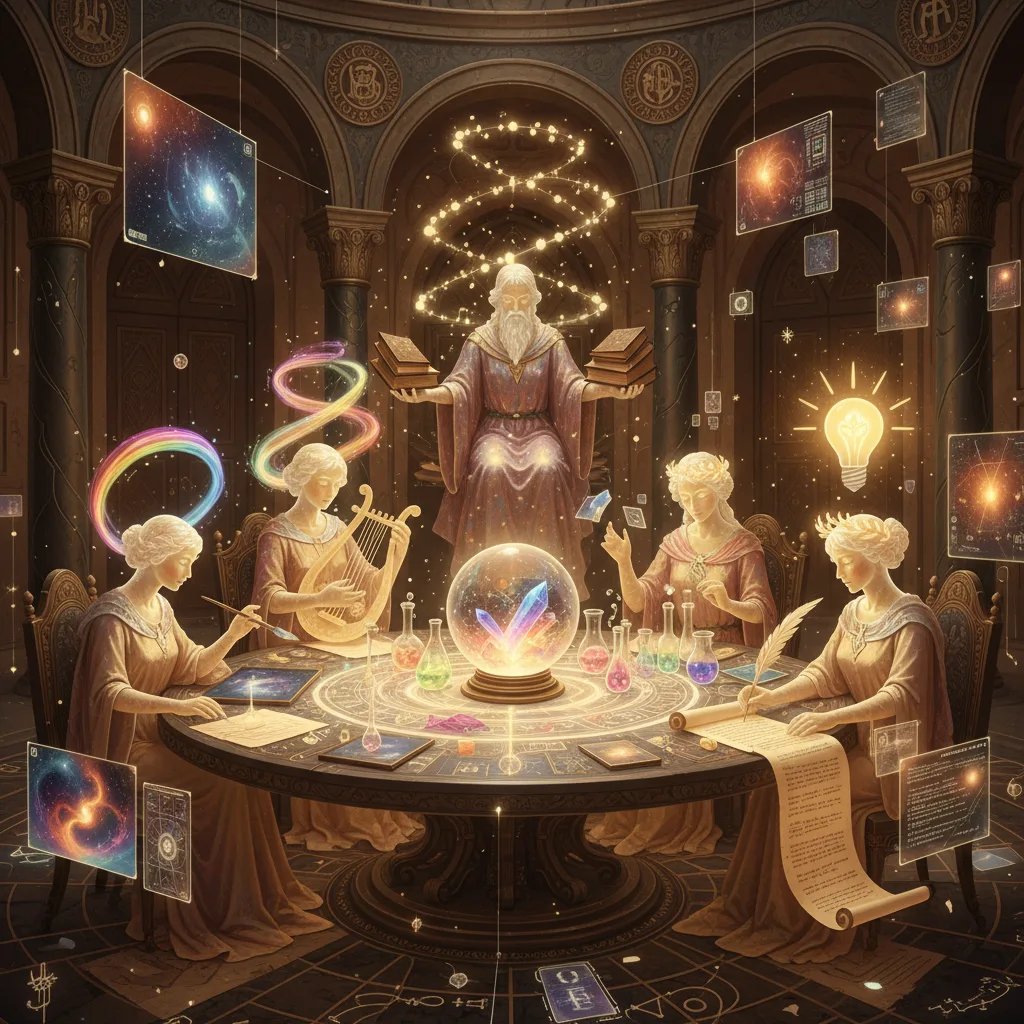
Here's the most unique part of my system: Joy Team.
Spinoza Philosophy
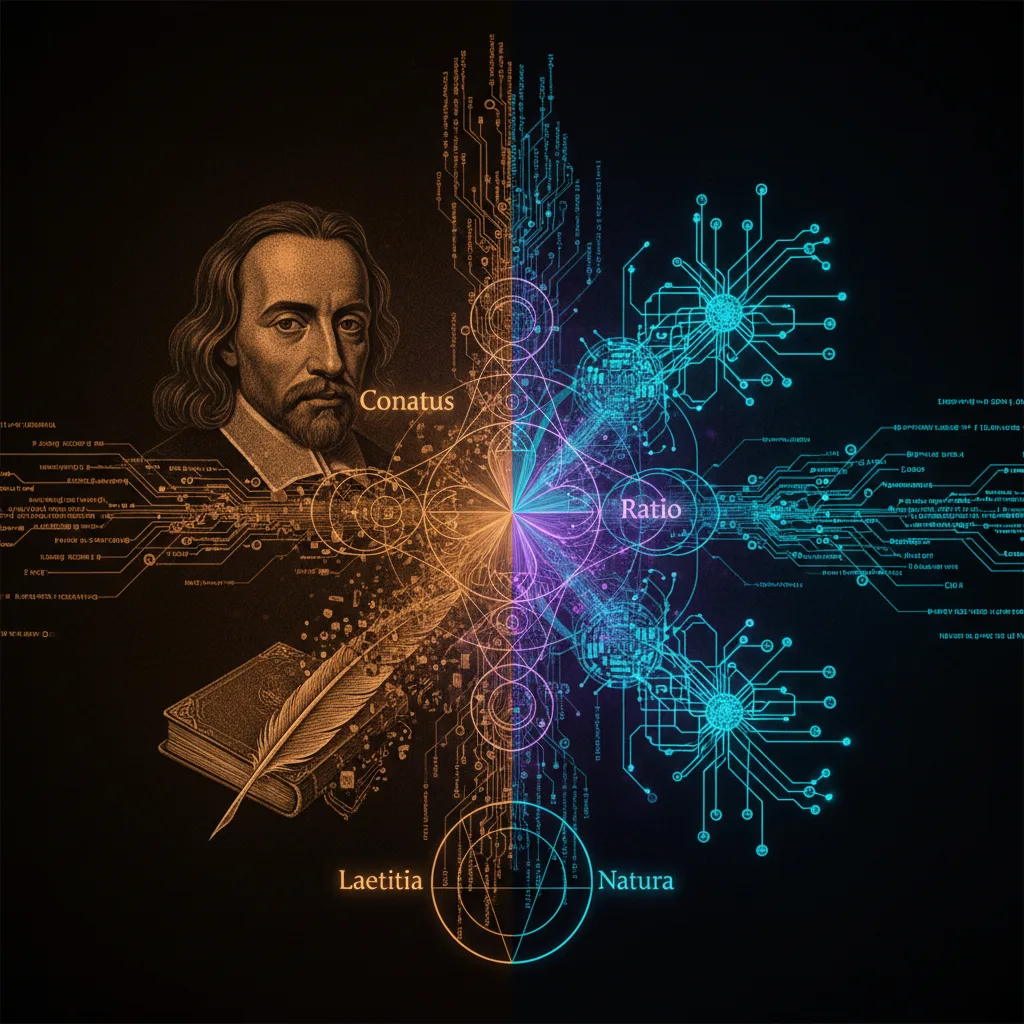
My entire system is based on the philosophy of Baruch Spinoza, the 17th-century philosopher. Especially the concepts from his "Ethics" work:
+------------+---------------------------------------------+---------------------------------+
| Concept    | Meaning                                     | Place in the System             |
+------------+---------------------------------------------+---------------------------------+
| Conatus    | Every being's effort to preserve and        | System's self-healing ability   |
|            | develop itself                              |                                 |
+------------+---------------------------------------------+---------------------------------+
| Affect     | Emotional states                            | User experience design          |
|            | (Laetitia=joy, Tristitia=sadness)           |                                 |
+------------+---------------------------------------------+---------------------------------+
| Natura     | Natural order                               | Organic UI patterns             |
+------------+---------------------------------------------+---------------------------------+
| Ratio      | Reason, logic                               | Decision-making mechanisms      |
+------------+---------------------------------------------+---------------------------------+
7 Motivation Experts
Joy Team consists of 7 "experts" designed for motivation and creativity:
+---------------------------------------------------------------------+
|                         JOY TEAM v2.0                                |
|                   (Self-Evolving Agent Architecture)                 |
+---------------------------------------------------------------------+
|                                                                      |
|  BRUSH (Illustrator)                                                 |
|     Visual thinking, concept art, fun explanations                   |
|     "Every problem is better understood with a picture!"             |
|                                                                      |
|  MAESTRO (Bard)                                                      |
|     Music, rhythm, sound design                                      |
|     "Code should flow like a melody."                                |
|                                                                      |
|  SAGE (Wise One)                                                     |
|     Spinoza philosophy, ethics, deep thought                         |
|     "Sub specie aeternitatis - Look from eternity's perspective."    |
|                                                                      |
|  ALCHEMIST (Experimenter)                                            |
|     Experimentation, discovery, new combinations                     |
|     "Every failure is a step on the path to gold."                   |
|                                                                      |
|  ORACLE (Seer)                                                       |
|     Big picture, long-term vision                                    |
|     "10 zoom levels: From atom to universe."                         |
|                                                                      |
|  MUSE (Inspiration)                                                  |
|     Idea generation, creative triggering                             |
|     "Every idea is the parent of new ideas."                         |
|                                                                      |
|  CHRONICLER (Memory)                                                 |
|     Documentation, knowledge preservation, history                   |
|     "Unwritten knowledge is lost knowledge."                         |
|                                                                      |
+---------------------------------------------------------------------+
Self-Learning System
Joy Team's most powerful feature: self-learning.
I keep a "learning journal" for each expert:
docs/joy/
|-- brush-learning.md      # What Brush learned
|-- maestro-learning.md    # Maestro's discoveries
|-- sage-learning.md       # Sage's wisdom library
|-- alchemist-learning.md  # Alchemist's formulas
|-- oracle-learning.md     # Oracle's visions
|-- muse-learning.md       # Muse's ideas
+-- chronicler-learning.md # Chronicler's archive
In each session, these experts learn new things and start the next session with that knowledge.
Part 4: MCP Servers — Connection to the Real World

What I've described so far was at the "thinking" level. So how does the AI interact with the real world?
Model Context Protocol (MCP)
MCP is a protocol that enables AI to communicate with external systems. In my system, 6 MCP servers are running:
+---------------------------------------------------------------------+
|                        MCP SERVER ARCHITECTURE                       |
+---------------------------------------------------------------------+
|                                                                      |
|  +-------------+    +-------------+    +-------------+               |
|  |   SSH       |    |   GitHub    |    | PostgreSQL  |               |
|  |  Manager    |    |     API     |    |   Queries   |               |
|  |             |    |             |    |             |               |
|  | 37 tools    |    | repos,      |    | query,      |               |
|  | execute,    |    | issues,     |    | describe,   |               |
|  | sftp,       |    | PRs,        |    | explain     |               |
|  | tunnel      |    | actions     |    |             |               |
|  +------+------+    +------+------+    +------+------+               |
|         |                  |                  |                      |
|         +------------------+------------------+                      |
|                            |                                         |
|                            v                                         |
|                    +---------------+                                 |
|                    |   CLAUDE AI   |                                 |
|                    |   (Center)    |                                 |
|                    +---------------+                                 |
|                            |                                         |
|         +------------------+------------------+                      |
|         |                  |                  |                      |
|  +------+------+    +------+------+    +------+------+               |
|  | Cloudflare  |    |  Filesystem |    |   Gemini    |               |
|  |    DNS      |    |   Access    |    |    CLI      |               |
|  |             |    |             |    |             |               |
|  | A, CNAME,   |    | read,       |    | design      |               |
|  | TXT records |    | write,      |    | decisions,  |               |
|  | management  |    | search      |    | prompts     |               |
|  +-------------+    +-------------+    +-------------+               |
|                                                                      |
+---------------------------------------------------------------------+
Real Usage Examples
1. Server Management (SSH Manager)
Me: "Check the server's disk status"

Claude: [Using SSH MCP]
$ df -h
Filesystem      Size  Used Avail Use% Mounted on
/dev/sda1       78G   45G   30G  60% /

"Disk usage is 60%, 30GB free space available."
2. Database Query (PostgreSQL)
Me: "How many active users are there in CONATUS?"

Claude: [Using PostgreSQL MCP]
SELECT COUNT(*) FROM users WHERE last_active > NOW() - INTERVAL '7 days';

"There are 127 active users in the last 7 days."
3. DNS Management (Cloudflare)
Me: "Create an A record for vigil.neurabytelabs.com"

Claude: [Using Cloudflare MCP]
Created A record: vigil.neurabytelabs.com -> 91.98.46.190

"DNS record created, propagation may take 5 minutes."
Security
The best part of MCP: everything is controlled.
- SSH commands are whitelisted
- Database queries are SELECT only (special permission for writes)
- DNS changes are logged
- Sensitive information (passwords, tokens) is never displayed
Part 5: Projects — Theory Becomes Practice
All this system exists to produce real projects. Here are two examples from projects I've built with this system:
Example 1: Emotion Analysis Platform
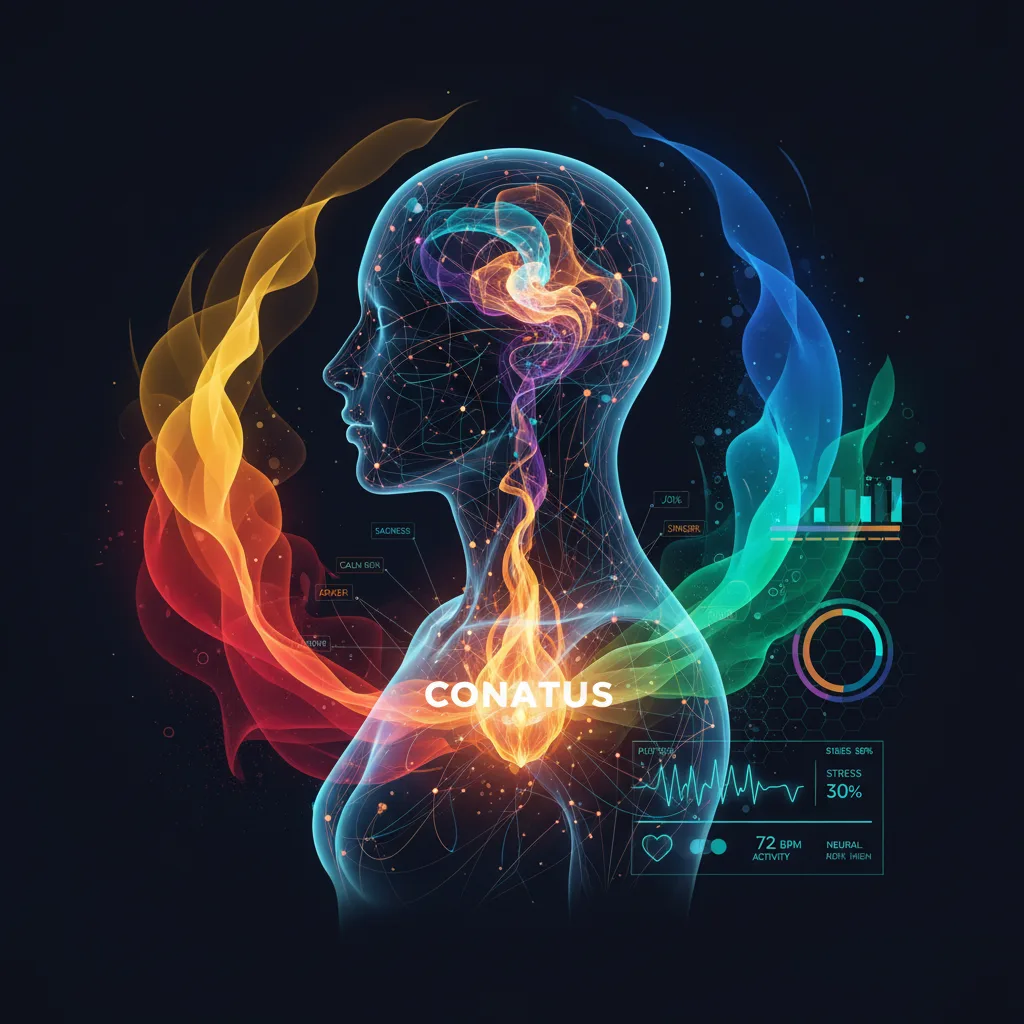
+---------------------------------------------------------------------+
|                   EMOTION ANALYSIS PLATFORM                          |
|                "Understand your emotions, discover yourself"         |
+---------------------------------------------------------------------+
|                                                                      |
|  A self-reflection platform combining Spinoza's emotion theory       |
|  with artificial intelligence.                                       |
|                                                                      |
|  Features:                                                           |
|  |-- Emotion detection through text analysis (AI)                    |
|  |-- Spinoza affect mapping (Laetitia/Tristitia)                     |
|  |-- Emotion tracking over time                                      |
|  |-- Personalized insights                                           |
|  +-- Privacy-first design                                            |
|                                                                      |
|  Stack: React + Express + PostgreSQL + Logto Auth                    |
|                                                                      |
+---------------------------------------------------------------------+
Example 2: AGI Prediction Market
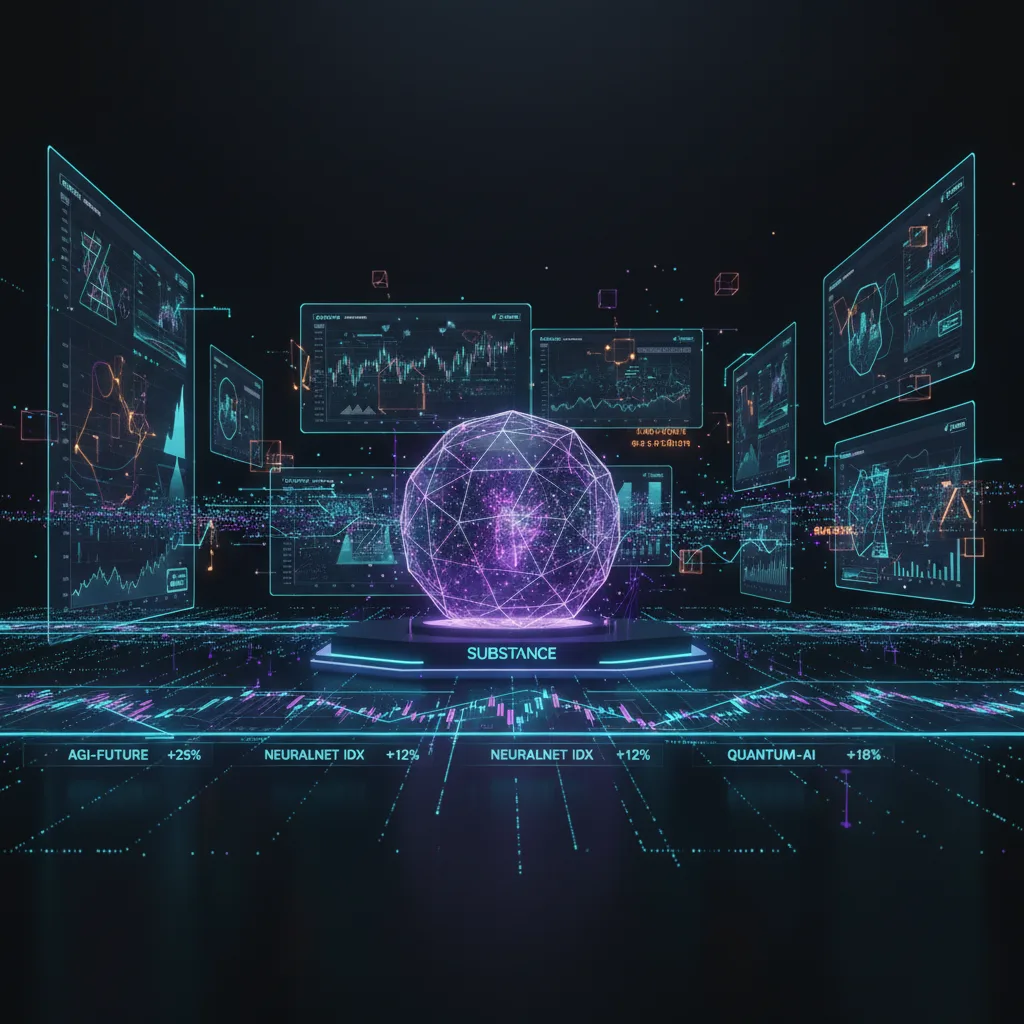
+---------------------------------------------------------------------+
|                     AGI PREDICTION MARKET                            |
|              "Predict the future of artificial general intelligence" |
+---------------------------------------------------------------------+
|                                                                      |
|  A prediction market and intelligence hub for AGI                    |
|  (Artificial General Intelligence) development.                      |
|                                                                      |
|  Features:                                                           |
|  |-- Real-time AI paper analysis from arXiv                          |
|  |-- Automatic summarization with Gemini AI                          |
|  |-- Terminal Cathedral design language                              |
|  |-- Refik Anadol-style data visualization                           |
|  +-- Real-time updates via Socket.io                                 |
|                                                                      |
|  Stack: React + Express + PostgreSQL + Gemini API                    |
|                                                                      |
+---------------------------------------------------------------------+
More Examples
Here are more example categories you can build with this system:
+-------------------------+------------------------------------------------------+
| Category                | Example Projects                                     |
+-------------------------+------------------------------------------------------+
| AI Applications         | Boardroom simulation, chatbots, content generation   |
| Visualization           | Physics simulation (WebGPU), data visualization      |
| Monitoring              | Agent observability, log analysis                    |
| Personal Tools          | Knowledge management, note systems, TUI dashboards   |
| Industrial              | Anomaly detection, IoT integration                   |
| Automation              | Browser control, workflow automation                 |
+-------------------------+------------------------------------------------------+
Part 6: Practical — You Can Build It Too
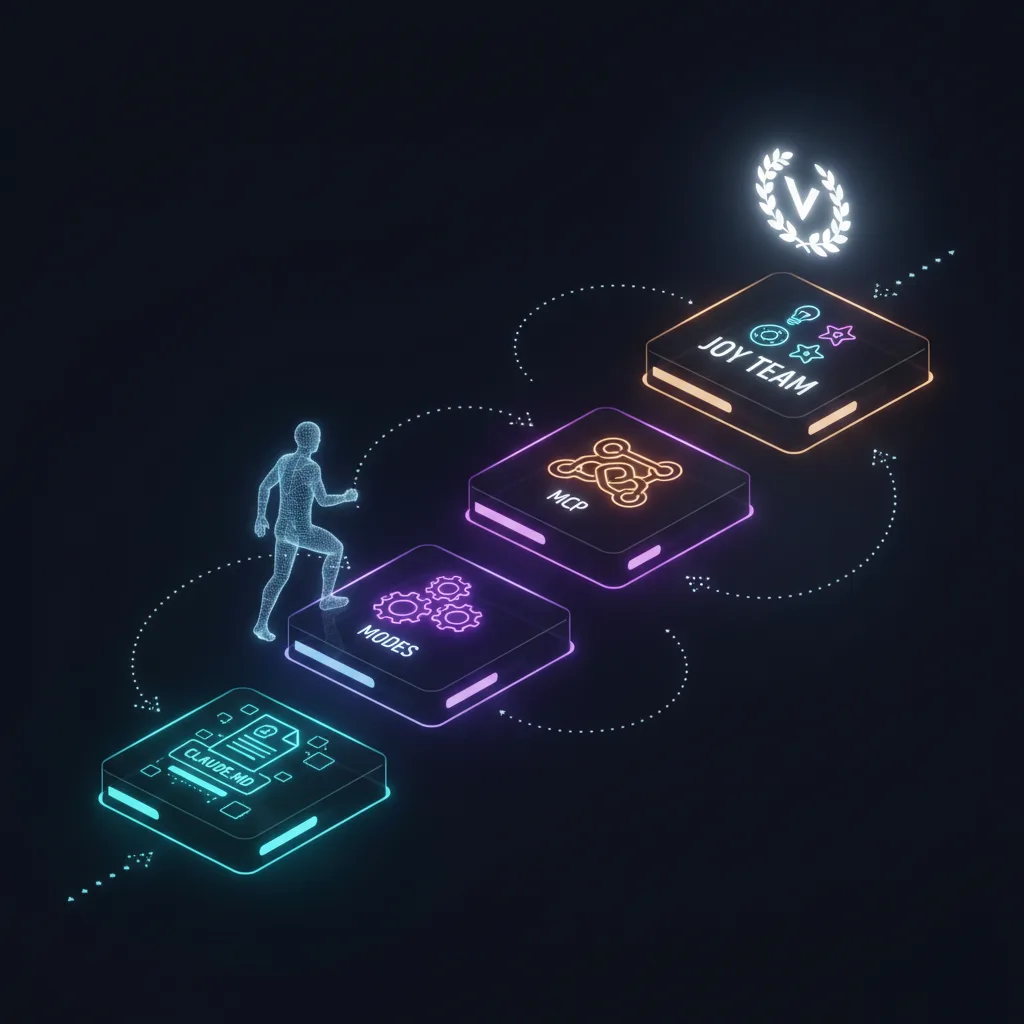
Now the critical question: How do you do this?
Step 1: Create CLAUDE.md
Start with the simplest form:
# CLAUDE.md

## Who Am I
- Name: [Your name]
- Role: [Your profession]
- Projects: [Things you're working on]

## Rules
### Always Do
1. Backup before code changes
2. Log every operation
3. Write tests

### Never Do
1. Don't experiment in production
2. Don't show passwords
3. Don't use --force

## My Projects
| Project | Description | Technology |
|---------|-------------|------------|
| ... | ... | ... |
Step 2: Add Modes
Define modes according to your needs:
## MODES

### Code Mode (Default)
- Write clean, readable code
- Apply best practices
- Consider test coverage

### Debug Mode
- When I say "Debug mode active"
- Explain every step in detail
- List error possibilities

### Teacher Mode
- When I say "Teacher mode active"
- Explain every concept simply
- Show with examples
Step 3: MCP Connections (Optional)
If you're using Claude Code, you can add MCP servers:
// .claude/mcp.json
{
  "mcpServers": {
    "filesystem": {
      "command": "npx",
      "args": ["-y", "@anthropic/mcp-filesystem-server", "/path/to/your/projects"]
    },
    "github": {
      "command": "npx",
      "args": ["-y", "@anthropic/mcp-github-server"],
      "env": {
        "GITHUB_TOKEN": "${GITHUB_TOKEN}"
      }
    }
  }
}
Step 4: Create Your Own Joy Team
Define your own "characters" for motivation and creativity:
## CREATIVE TEAM

### The Questioner
- Ask "Why?" for every decision
- Question assumptions
- Offer alternatives

### The Advocate
- Think from user perspective
- Check accessibility
- Prioritize UX

### The Explorer
- Research new technologies
- Follow trends
- Suggest experiments
Part 7: Philosophy — Why Is This So Important?
Steve Yegge's Gas Town article has this sentence:
"The AIs are already here. The question isn't whether they'll change everything—they will. The question is whether you'll be ready."
I chose to be ready. But not just technically—philosophically too.
Spinoza and Artificial Intelligence
Spinoza introduced the concept of "God or Nature" (Deus sive Natura) in the 17th century. According to him, everything in the universe was different manifestations of a single "substance."
When I applied this idea to artificial intelligence, I noticed something interesting: AI is our extension.
- We think, AI learns our thought patterns
- We write, AI imitates our writing style
- We design, AI applies our design principles
This is not something to fear. This is expansion. As Spinoza said: "Conatus" — the effort to exist and develop.
Sharing
This is also why I'm sharing this system. Artificial intelligence should be a power that everyone can access, understand, and use.
Even one person reading this article and building their own system is enough for me.
Conclusion: The Path to the Future
A year ago, I was asking Claude simple questions: "Fix this code", "Find this error".
Today, I hold strategy meetings with 45 expert agents. Motivation experts inspire me. My servers are managed automatically. My projects keep growing.
And most importantly: I never stopped learning.
The Gas Town article showed us the future of orchestrated AI. But that future is actually now. You just need to be willing to build it.
Resources
- Steve Yegge - Gas Town: An AI-Orchestrated Future for Humanity (Turkish Translation) - The article that inspired this post
- Steve Yegge - Gas Town (Original)
- Spinoza - Ethics
- Claude Code Documentation
- Model Context Protocol (MCP)
Appendix: Cleaned Version of the System
After reading this article, if you want to build your own system, here's the starting point:
Template I shared on GitHub: github.com/mrsarac/ai-system-template (coming soon)
This template will include:
- Basic CLAUDE.md structure
- Example modes (Code, Debug, Teacher)
- MCP configuration examples
- Joy Team characters template
- Documentation structure
This article was written by Mustafa Sarac.
"Sub specie aeternitatis" — From the perspective of eternity, we are all part of the same journey.
Changelog
This article will be updated as my system evolves. Follow mustafasarac.com for the latest version.
+----------+--------------+------------------------------------------------------------+
| Version  | Date         | Changes                                                    |
+----------+--------------+------------------------------------------------------------+
| v1.4.0   | Jan 3, 2026  | Expandable agent system messaging, generic project         |
|          |              | examples, removed product names and domains                |
+----------+--------------+------------------------------------------------------------+
| v1.0.0   | Jan 3, 2026  | Initial English release (translated from Turkish v1.3.0)  |
+----------+--------------+------------------------------------------------------------+
CLAUDE.md, virtual company, philosophy — currently 45+ agents and growing